Portal:Liquor

|
Distilled beverages | Baijiu | Brandies | Fruit brandies | Distilled ciders | Drink distillers | Fermented teas | Fortified wine | Gins | Horilkas | Liqueurs | Neutral grain spirits | Pisco | Rice drinks | Rums | Tequila | Vodkas | Whisky/Whiskey Introduction.svg)  Liquor (/ˈlɪkər/ LIK-ər, sometimes hard liquor), spirit, distilled spirit, or spirituous liquor are alcoholic drinks produced by the distillation of grains, fruits, vegetables, or sugar that have already gone through alcoholic fermentation. While the word liquor usually refers to distilled alcoholic spirits rather than drinks produced by fermentation alone, it can sometimes be used more broadly to refer to any alcoholic beverage (or even non-alcoholic ones produced by distillation or some other practices, such as the brewed liquor of a tea). The distillation process concentrates the alcohol, so the resulting condensate has an increased alcohol by volume. As liquors contain significantly more alcohol (ethanol) than other alcoholic drinks, they are considered "harder". In North America, the term hard liquor is sometimes used to distinguish distilled alcoholic drinks from non-distilled ones, whereas the term spirits is more commonly used in the United Kingdom. Some examples of liquors are vodka, rum, gin and tequila. Liquors are often aged in barrels, such as for the production of brandy, tequila, and whiskey, or are infused with flavorings to form flavored liquors, such as absinthe. (Full article...) Selected article -The Fine Art of Mixing Drinks is a book about cocktails by David A. Embury, first published in 1948. The book is noteworthy for its witty, highly opinionated and conversational tone, as well as its categorization of cocktails into two main types: aromatic and sour; its categorization of ingredients into three categories: the base, modifying agents, and special flavorings and coloring agents; and its 1:2:8 ratio (1 part sweet, 2 parts sour, 8 parts base) for sour type cocktails. (Full article...) Selected biography - John Walker (born 1805, Kilmarnock – 1857) was a Scottish grocer, who originated what would become one of the world's most famous whisky brand names, Johnnie Walker, despite the fact he was himself a teetotaler. (Full article...) General articles -
Did you know -
| |||||||||||||||||||||||||||||||||||||||||||||||||||||||||||||||||||||||||||||||||||||||||||||||||||||||||||||||||||||||||||
.png)
.jpg)


.jpg)


.jpg)


| Active malt | |
|---|---|
Active grain | |
Closed or mothballed | |

| Primary Trail |  | |
|---|---|---|
| Craft Tour | ||
| Acquisitions |
| ||||||||||||||||||||||||||||||
|---|---|---|---|---|---|---|---|---|---|---|---|---|---|---|---|---|---|---|---|---|---|---|---|---|---|---|---|---|---|---|---|
| Distilleries | |||||||||||||||||||||||||||||||
| Spirits brands |
| ||||||||||||||||||||||||||||||
| Wine brands |
| ||||||||||||||||||||||||||||||
| Former brands | |||||||||||||||||||||||||||||||
| People | |||||||||||||||||||||||||||||||
| |||||||||||||||||||||||||||||||


Related topics
| ||||||||||||
| ||||||||||||


| Occupations |  | ||||
|---|---|---|---|---|---|
| Alcoholic beverages | |||||
| Non-alcoholic mixers | |||||
| Equipment |
| ||||
| Garnishes |
| ||||
| People | |||||
| Terminology | |||||
| Related | |||||
General images -
-

-
 A Caipirinha with lime (from List of cocktails)
 -
 These flaming cocktails illustrate that some liquors will readily catch fire and burn. (from Liquor)
 -

-
 A display of various liquors in a supermarket (from Liquor)
 -
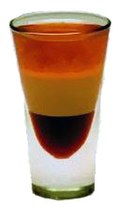 A B-52 (from List of cocktails)
 -
 Aviation (from List of cocktails)
 -
 Bee's knees (from List of cocktails)
 -
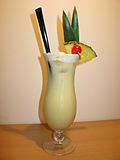 A piña colada (from List of cocktails)
 -
 A Ramos gin fizz (from List of cocktails)
 -

-
 A cosmopolitan (from List of cocktails)
 -
 An illustration of brewing and distilling industry methods in England, 1858 (from Liquor)
 -
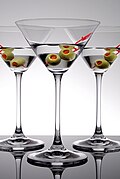 A martini is a classic gin-based cocktail. (from List of cocktails)
 -
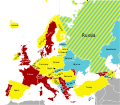 Map of Europe with individual countries grouped by preferred type of alcoholic drink, based on recorded alcohol consumption per capita (age 15+) (in liters of pure alcohol) in 2016.WineBeerSpirits(from Liquor)
 -
 Some single-drink liquor bottles available in Germany (from Liquor)
 -
 Mulled wine steeping (Swedish glögg) (from List of cocktails)
 -
 Reservoir glass with naturally coloured verte absinthe and an absinthe spoon (from List of cocktails)
 -
 A grasshopper (from List of cocktails)
 -
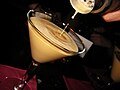 A Brandy Alexander being served (from List of cocktails)
 -
 Negroni (from List of cocktails)
 -

-
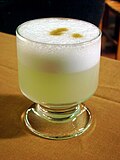 A pisco sour (from List of cocktails)
 -
 Spirits consumption per person (from Liquor)
 -

-
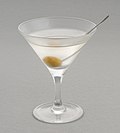 A martini cocktail (from List of cocktails)
 -


.jpg)


.jpg)

.svg)


.svg)


Garnishes
-
 Pineapple wedge (from Cocktail garnish)
 -
-
 Cocktail olive (from Cocktail garnish)
 -
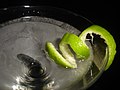 Lime twist (from Cocktail garnish)
 -

-
 A whiskey sour, served in a coupe glass, is garnished with a spiral of lemon peel and two maraschino cherries on a cocktail pick, along with drops of bitters swirled into the foam (from egg white) atop the drink. (from Cocktail garnish)
 -
 Shrimp (from Cocktail garnish)
 -
 Lemon slice (from Cocktail garnish)
 -
 Raspberry (from Cocktail garnish)
 -


.jpg)


List articles

- List of alcoholic beverages
- Cocktails with cachaça
- List of cocktails
- List of cocktails (alphabetical)
- List of countries by alcohol consumption per capita
- List of fruit brandies
- List of gins
- List of IBA official cocktails
- List of liqueurs
- List of national liquors
- List of rums
- List of tequilas
- List of vodkas
- List of whisky/whiskey brands
Producers
Categories

Stub articles

The following stub articles can be expanded.
Related WikiProjects

- WikiProject Agriculture
- WikiProject Beer
- WikiProject Food and Drink
- WikiProject Spirits (semi-active)
- Wikiproject Wine (semi-active)
- WikiProject Bartending (Inactive)
- WikiProject Breakfast (inactive)
- Wikiproject Bacon (inactive)
Associated Wikimedia
The following Wikimedia Foundation sister projects provide more on this subject:
-
 Commons
Free media repository -
 Wikidata
Free knowledge base -
 Wikiquote
Collection of quotations -
 Wikisource
Free-content library -
 Wikiversity
Free learning tools -
 Wikivoyage
Free travel guide -
 Wiktionary
Dictionary and thesaurus


The following Wikimedia Foundation sister projects provide more on this subject:
-
Commons
Free media repository -
Wikidata
Free knowledge base -
Wikiquote
Collection of quotations -
Wikisource
Free-content library -
Wikiversity
Free learning tools -
Wikivoyage
Free travel guide -
Wiktionary
Dictionary and thesaurus
Web resources
- Distilled spirit. Encyclopædia Britannica.
- Distilled beverages (category). Wiktionary.
- Standards of Identity for Distilled Spirits. U.S. Government Publishing Office.
- The Distilled Spirits Council of the United States
More portals


Content Disclaimer
Informasi ini disarikan dari Wikipedia dan disajikan kembali untuk tujuan edukasi. Konten tersedia di bawah lisensi CC BY-SA 3.0. Kami tidak bertanggung jawab atas ketidakakuratan data yang bersumber dari kontribusi publik tersebut.
- The information displayed on this website is sourced in part or in whole from Wikipedia and has been adapted for the purpose of restating it. We strive to provide accurate and relevant information, however:
- There is no guarantee of absolute accuracy. Wikipedia is an open, collaborative project that can be edited by anyone, so information is subject to change.
- It is not intended to constitute professional advice. The content displayed is for informational and educational purposes only. For important decisions (e.g., medical, legal, or financial), please consult a professional.
- Content copyright. Wikipedia is licensed under the Creative Commons Attribution-ShareAlike License (CC BY-SA). This means that content may be reused with appropriate attribution and shared under a similar license.
- Responsible use. Any risk arising from the use of information from this website is entirely the responsibility of the user.