Luna Park, Berlin
 The Terrasses at Luna Park, 1904 | |
 Interactive map of Luna Park | |
| Location | Berlin |
|---|---|
| Coordinates | 52°29′46″N 13°16′55″E / 52.496°N 13.282°E |
| Status | Defunct |
| Opened | 1909 |
| Closed | 1933 |
Luna Park in the Halensee area of Berlin, Germany was an amusement park in operation from 1909 to 1933. At that time, it was Europe's largest. The park was closed for World War I but reopened after Armistice. Luna Park closed for the last time in October 1933.[1]
History
Origin
Around 1900 the businessman Saeger operated the Wirtshaus (guest house) am Halensee near the popular outdoor swimming pool on the east shore of Halensee Lake. At that time, the shopping district Kurfürstendamm was a forest path where on Sundays families took carriages from the nearby Grunewald train station (now Halensee) and drove in the Grunewald forest. Here rest breaks were made and there was a motto: "Families can make coffee here." On the grounds of the inn there was already a fairground with carousel, shooting dice and stalls, and a water slide, where a similar pontoon-like barge rolled down the mountain into the lake.
Opening and heyday

On 14 May 1909 the gourmet August Aschinger together with the former chef at the Kempinski Hotel, Bernd Hoffmann, opened the terraces at Halensee, which were renamed that year Luna Park. It was a modern fairy-tale palace, with magnificent towers and a large staircase down to the lake.

The park attractions included all the typical fairground attractions of the time, like a water slide that ended in the lake. It had as a special feature a water chute, which the Berliners called the "tart aquarium" because the ladies in the newest bathing attire presented themselves to the sitting gentlemen on the rim.
Other attractions were a loose staircase (Shimmy-Treppe) with a fan at the end that hoisted the skirts of the ladies, as well as a mountain train or a hippodrome. Following the example of Coney Island in Brooklyn, New York, an amusement park was established, offering sensations, adventures, and dangers, as well as the illusion of the big wide world and the experience of the seemingly limitless possibilities of technology.
Luna Park offered anthropological human shows ("Völkerschauen"); an early escalator; a large, nightly fireworks display; theater, revues, jazz, and cabaret; dance tournaments, and boxing matches. In 1926 the young Max Schmeling won his first title fight here. The restaurants had a capacity of 16,000 seats. There was a Bavarian-themed village where beer flowed in streams and the Luna Palace for more the lofty clientele. In its early years, the park counted 50,000 visitors a day and on weekends substantially more. As early as 1910, the millionth visitor was received.
Decline

During the first World War and in the following period of hyperinflation in Weimar Germany, visitor numbers declined and the physical plant was in desolate condition. On May 9, 1929, the amusement park reopened after a major renovation. It succeeded; however, it did not attain its former grandeur.
Closure
In October 1933 the amusement park had to permanently close, and in 1934 the entire complex was demolished. The puppeteer Alfredo Bannenberg, being chased by Nazis, used the closed facility as a hideout for a short time.
The Nazis considered the park to be an eyesore. Soon it was found to be in the path of the required Halenseestraße, which was opened for the 1936 Summer Olympics to create a fast link between the Olympic Stadium, the Deutschlandhalle, the Berliner Funkturm, and southern venues.
References
- Notes
- ^ Spiegel einestages Archived 2009-05-28 at the Wayback Machine Article and photos of Luna Park from Spiegel Online
- Claudia Puttkammer and Sacha Szabo: Gruß aus dem Luna-Park. Eine Archäologie des Vergnügens. Freizeit- und Vergnügungsparks Anfang des zwanzigsten Jahrhunderts. WVB, Berlin, 2007, ISBN 978-3-86573-248-4.
Gallery
-
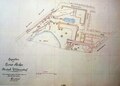 Lunapark plan 1911
 -
 Lunapark, Shimmy-Treppe, 1904
 -

-


External links
 Media related to Luna-Park Berlin at Wikimedia Commons
- Spiegel einestages Article and photos of Luna Park from Spiegel Online
- khd-Research Lunapark Personal website with additional information and pictures

Content Disclaimer
Informasi ini disarikan dari Wikipedia dan disajikan kembali untuk tujuan edukasi. Konten tersedia di bawah lisensi CC BY-SA 3.0. Kami tidak bertanggung jawab atas ketidakakuratan data yang bersumber dari kontribusi publik tersebut.
- The information displayed on this website is sourced in part or in whole from Wikipedia and has been adapted for the purpose of restating it. We strive to provide accurate and relevant information, however:
- There is no guarantee of absolute accuracy. Wikipedia is an open, collaborative project that can be edited by anyone, so information is subject to change.
- It is not intended to constitute professional advice. The content displayed is for informational and educational purposes only. For important decisions (e.g., medical, legal, or financial), please consult a professional.
- Content copyright. Wikipedia is licensed under the Creative Commons Attribution-ShareAlike License (CC BY-SA). This means that content may be reused with appropriate attribution and shared under a similar license.
- Responsible use. Any risk arising from the use of information from this website is entirely the responsibility of the user.